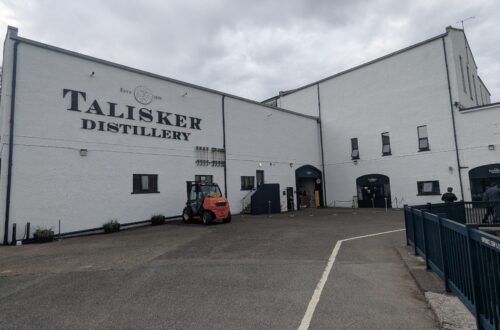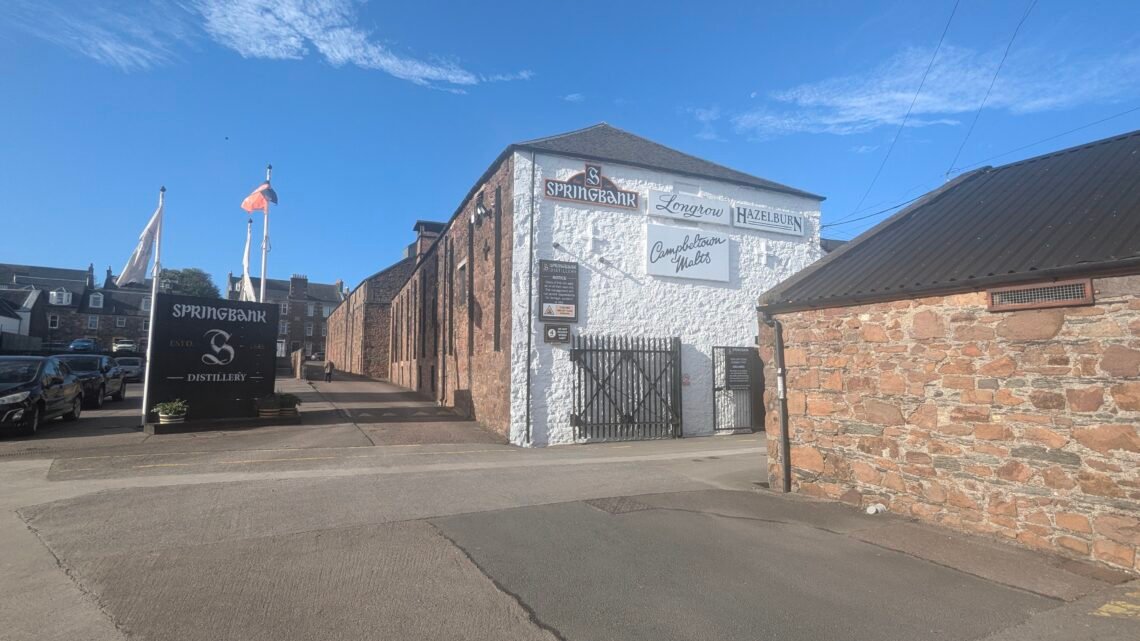
Whisky Pilgrimage: A 24hr day trip to Campbeltown from Edinburgh.
My Itinerary
03:45 – 05:10 – Bus CityLink (900: Glasgow): Edinburgh – Glasgow
06:10 – 10:18 – Bus West Coast Motors/Citylink (926: Campbeltown): Glasgow – Campbeltown
11:00 – 12:00 – Tour: Glen Scotia Standard Tour
15:00 – 16:15 – Tasting: Cadenheads Warehouse Tasting
17:00 – 21:10 – Bus West Coast Motors/Citylink (926: Glasgow): Campbeltown – Glasgow
22:00 – 23:30 – Bus CityLink (900: Edinburgh): Glasgow – Edinburgh
Total cost: £18 (travel) + £15 (Tour) = £32*
Warehouse tasting costs £45 or is free for Cadenheads membership holders (twice per year)
My latest adventure was to visit the smallest whisky region in search of a bottle of one of my favourite drams, the Springbank 15-year-old. Usually, buying a bottle of whisky is pretty straightforward; you go to a shop, online store or distillery and pick up what you want. However, Springbank is a little different from your standard distillery. They are so popular that they have to limit how many bottles of their core range they sell each day, and if you are lucky enough to get a bottle, it automatically doubles in price after you buy it. I have to say I was not fully aware of the intense interest in Springbank until my visit there last year, but I have since come to appreciate the uniqueness of Springbank whisky and the region of Campbeltown.
Campbeltown is not the easiest place to get to. Sitting on the end of a peninsula in Argyll and Bute, it is a long journey from almost anywhere in Scotland, but for whisky fans, it is worth making the effort to visit one of Scotland’s historic whisky regions. The people who make the journey here tend to be serious whisky enthusiasts: the sort of people who are willing to spend four hours on a bus in search of a particular bottle of Springbank (i.e me).
Although usually this would be an ideal place for an overnight stay, I looked up the bus times did the math and realised that it was actually possible to go there as a (very) long day trip. This had the benefit of saving money on hotel costs (which could be allocated to whisky), but the downside of spending 12 hours on a bus.
Getting to Campbeltown
Despite its remote location, Campbeltown is surprisingly accessible by public transport. You can take a short flight from Glasgow or one of several daily direct buses. I opted for the bus, partly because the Scottish Government’s new bus fare cap meant I could travel from Glasgow to Campbeltown and back for just £4 each way.
The downside? The journey takes at least four hours and often longer.
The upside? It’s a beautiful route and there is some special whisky at the end.
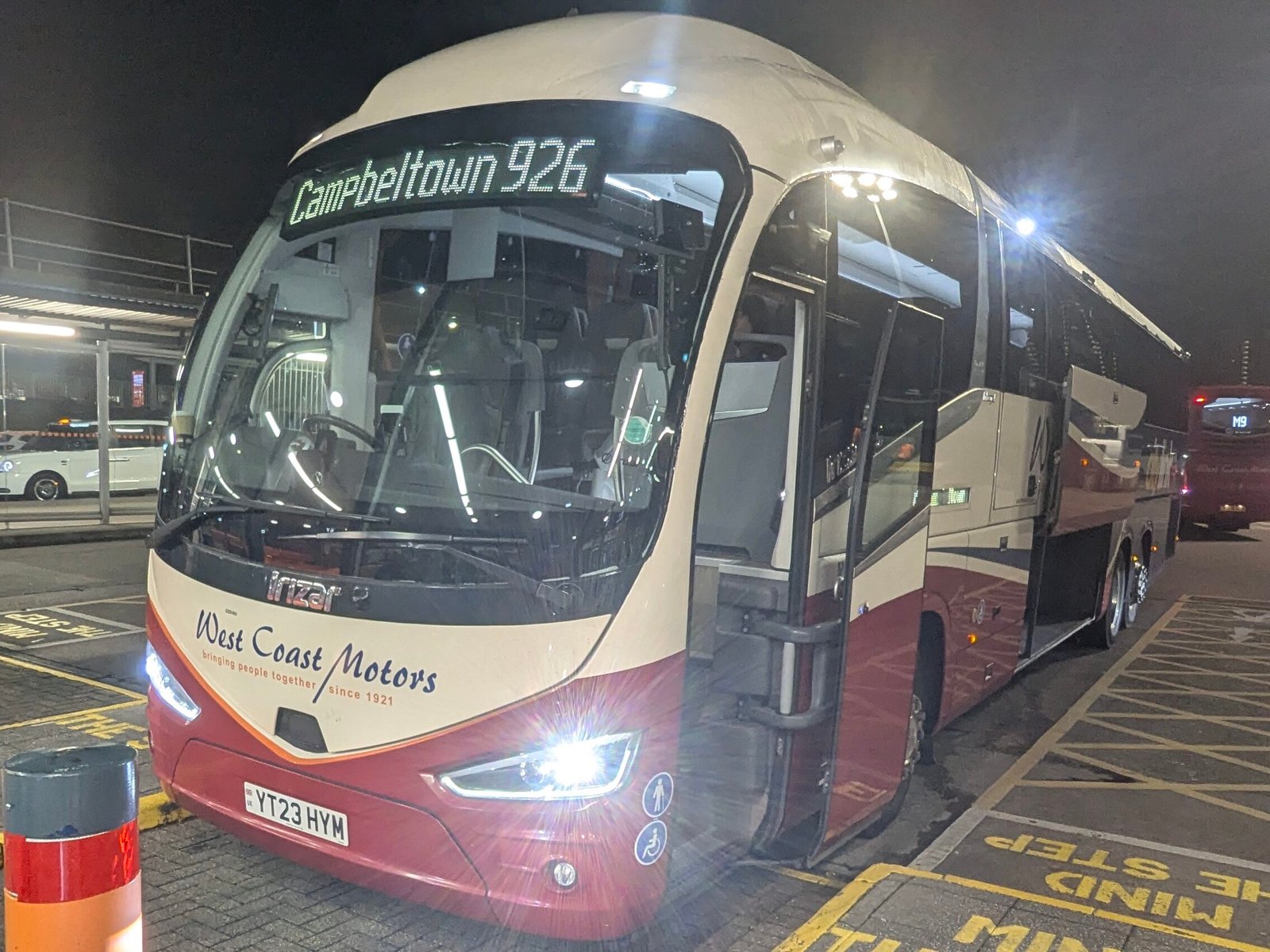
My day started early in the dark as I caught the 3:45 am bus from Edinburgh’s North St David Street to Glasgow (Edinburgh Bus station is not even open at this time). I left my flat around 3:15 am and passed a mixture of people who were heading home from a great night out or heading out to work on my way to the bus stop.
My bus was bang on time and got to Glasgow at just after 5 am, so as I had an hour before my connection, I had time for breakfast. One of the few advantages of being awake at that hour was that McDonald’s breakfasts were available. I ventured down to McDonald’s on Sauchihall St and got myself a sausage and egg McMuffin, hash brown and orange juice, which were ideal fuel for the long journey southwest.
The Campbeltown bus left Buchanan Bus Station from stand 55 just after 6 am. Although it runs on the Citylink network, the local operator West Coast Motors operates the service. The bus was comfortable, with decent legroom and a toilet on board, but it lacked USB charging points. Fortunately, I had a power bank, which was needed for the long day as I had to recharge my phone a couple of times.
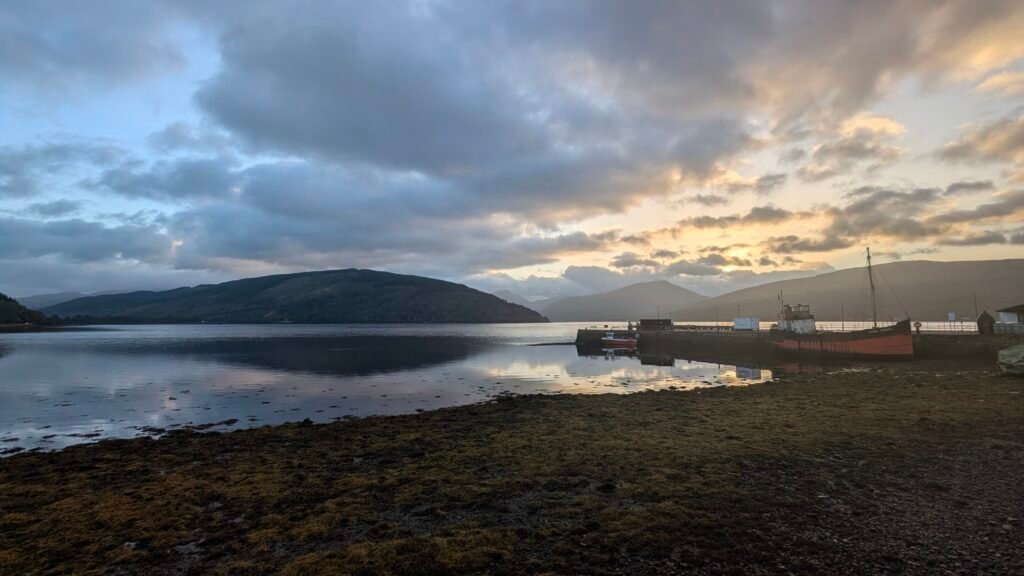
The journey itself is long but scenic; the route follows Loch Lomond and passes through Luss, Arrochar, and Inverary, where you have a 10-minute rest stop to stretch your legs and use the public toilets before continuing towards Campbeltown. I arrived in Campbeltown at around 10:20 am, which was right on schedule, and it was warm and sunny for October.
The Springbank Bottle Hunt
Springbank has a unique place in the whisky world. Its production methods remain famously old-school, and almost every part of the process takes place on-site. That traditional approach is a huge part of the distillery’s appeal. Unfortunately, its popularity has created another problem: getting hold of the whisky.
The Springbank 15 captures much of what makes the distillery so special. It has those distinctive maritime characteristics: salty, sea-air notes along with dark fruits from the sherry. However, a massive problem is trying to find a bottle.
Springbank 15 regularly appears at whisky auctions for two or three times its recommended retail price and is not available for sale in shops or online. The only place you will tend to see it for sale at a reasonable price is the Springbank distillery shop, but due to its popularity, only three bottles are put on the shelf each day. Yes. Three.
So my four-hour bus journey had a very specific purpose: I was going to Campbeltown to try to get one.
I arrived at the Springbank shop at around 10:30 am, just half an hour after opening which you would think would be early enough. However, this is the holy grail of whisky and people queue up before the shop even opens, trying to get a bottle of 10, 15 or a cage bottle.
So really, I was arriving late to the party and by the time I arrived, all the Springbank 15 had gone, and most of the Springbank 10 had disappeared too.
Luckily, someone had managed to secure a bottle of the 15 for me in advance. Otherwise, I would have travelled four hours each way and gone home empty-handed and I was so grateful. If I had not been able to get that bottle, there were some good cage bottles that were available, which included a Springbank 11-year-old finished in a recharred sherry cask, which cost £72. The cage bottles do offer something unique, and they are limited to one per person per week!
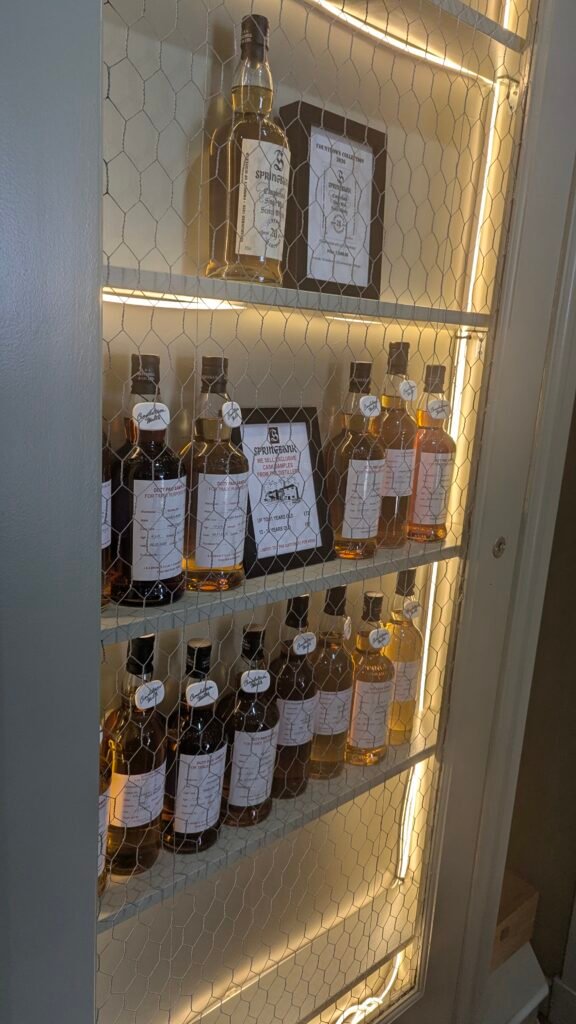
Cage Bottles
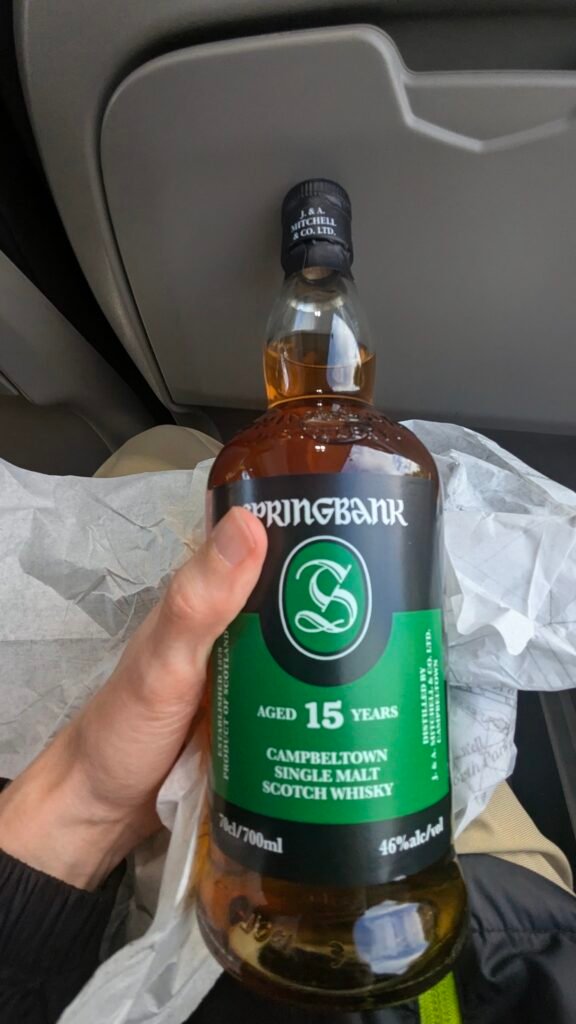
The Holy Grail!
Glen Scotia
With my bottle safely secured, I could finally relax and enjoy the rest of the day.
My first distillery visit was Glen Scotia. I had visited before, but on this occasion I had booked onto the standard tour at 11am. Despite it being a random Thursday in October, I was surprised by how busy it was. The small shop was almost full, with people waiting for the tour.
The tour lasts around an hour and gives a good overview of Glen Scotia’s production. The distillery has been operating, on and off, since 1832 and has more recently been upgrading some of its equipment.
The mash tun is particularly impressive, freshly painted with a gleaming copper lid. A small window allows you to look inside, and I happened to catch the wash being added to the barley. The six stainless steel washbacks are packed into a surprisingly small room. Space is clearly at a premium, so much so that additional washbacks had to be installed outside when the distillery expanded.
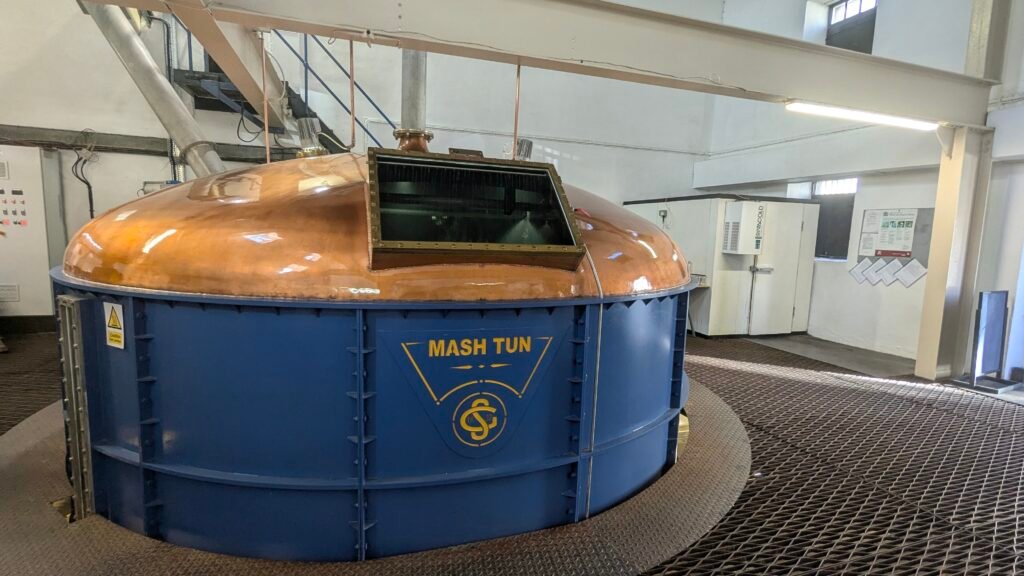
One of the interesting things I learned on the tour was that Glen Scotia uses a relatively long fermentation time, with fermentation lasting more than 100 hours. This produces a second stage of fermentation and is intended to encourage creamy and floral characteristics in the spirit.
From the washbacks, you move on to the stills. On my visit, the wash still was open and a distillation was taking place, giving us a great view of the process as the liquid began its transformation from a strong beer into spirit.
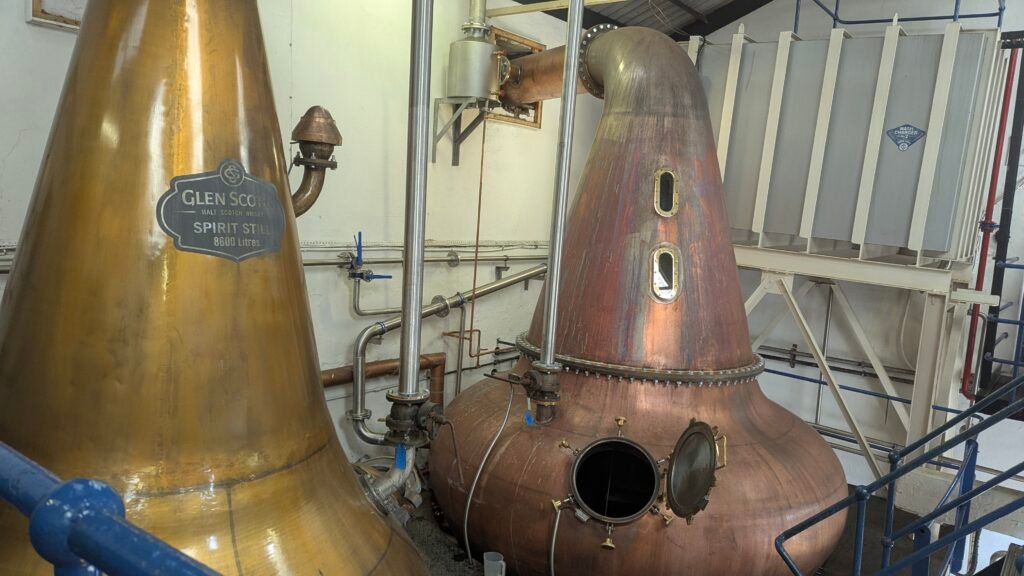
The tour then takes you downstairs to the spirit safe, where we were given the chance to try some of the new-make spirit. It was bottles at 72% abv and it was like rocket fuel. I have tasted a few new makes, but this one was a bit too raw to get much in terms of flavour, but it is a great touch that you get to taste it on the tour.
We then headed outside to one of the warehouses. Glen Scotia has three warehouses on site, including a large palletised warehouse stacked from floor to ceiling with casks. It’s impressive to see just how much whisky can be squeezed into a relatively small space, although I have to admit I still prefer the character of the old-school dunnage warehouses.
The final stop is the filling station, where casks are filled before being shipped to Loch Lomond for bottling.
Back in the shop, the tour finishes with a dram of Glen Scotia 12. It’s a solid core-range whisky: fruity, smooth and with a pleasing mouthfeel. At around £45 a bottle, I thought it offered pretty good value.
A Beach, a Dram and a Longrow
I had a few hours to fill before my afternoon tasting, so I met up with a friend and headed down to the beach for a walk. Afterwards, I grabbed some lunch before returning to Springbank for a dram at the Washback Bar, which is next door to the shop.
The bar is a great place to spend some time if you’re visiting Campbeltown. There is a good selection of Springbank whiskies available by the dram, along with daily specials.
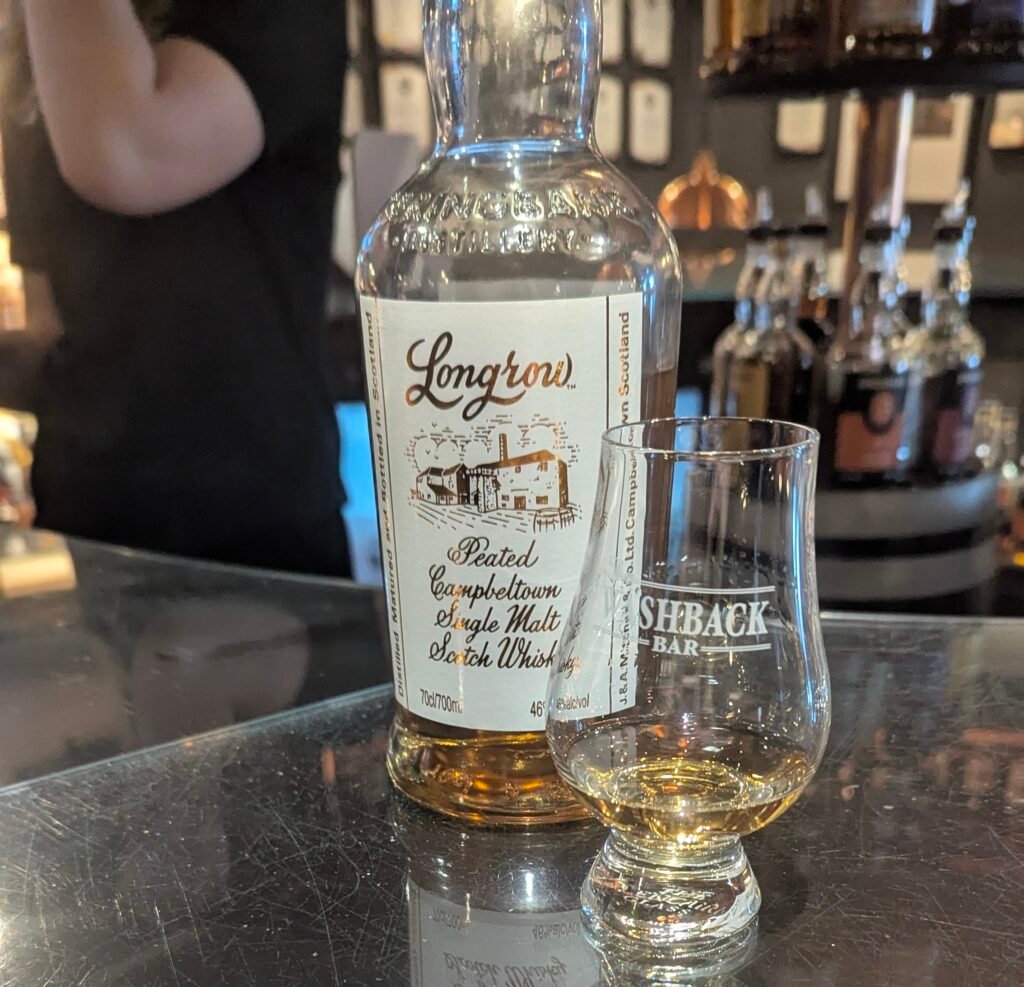
I opted for a Longrow, a whisky I think is often underrated. It’s heavily peated but surprisingly smooth, and I think it offers particularly good value both by the dram and by the bottle.
Cadenhead’s Warehouse Tasting
I’ve known about Cadenhead’s for a while, having attended some of their tastings at the Belfry, and I’d heard that the warehouse tasting in Campbeltown was well worth doing. So I booked myself in.
The warehouse tasting costs £45 and includes six drams straight from the cask, followed by a bonus dram in the tasting room at the end of the tasting. There is also the option of buying a lifetime Cadenhead’s membership for £75, which includes a tasting book, a T-shirt and two free tastings every year, which includes the warehouse tasting. Knowing I’d probably be back, I decided to go for the membership. If I return for another tasting, it’ll have already paid for itself.
The meeting point is at the Cadenhead’s shop rather than the tasting room. After checking in, we walked a few hundred yards to the warehouse, where a selection of casks had been laid out for us.
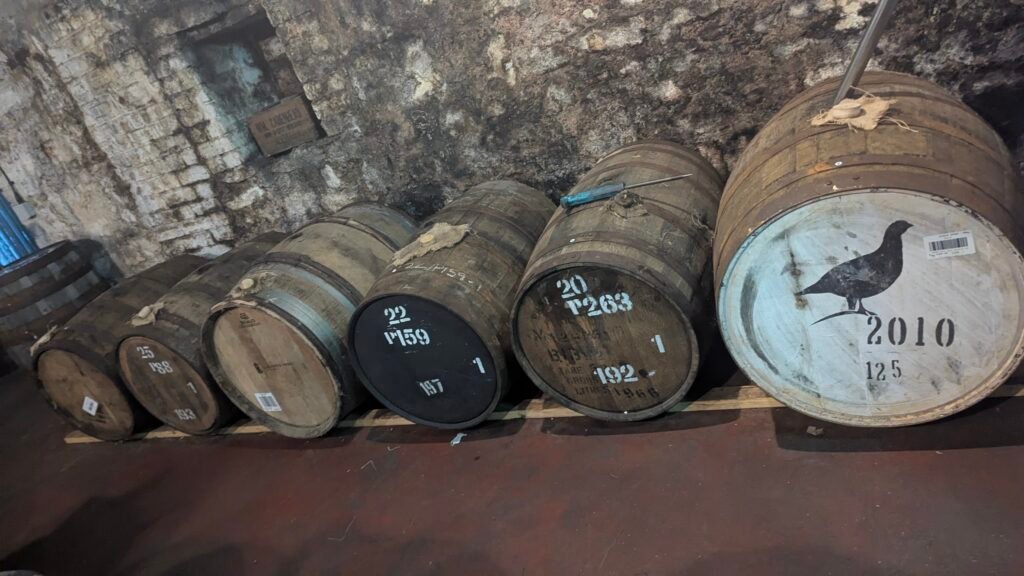
The tasting covered a good range of whisky from across Scotland. On my visit, the line-up included a 17-year-old Miltonduff, 15-year-old Tomatin, Lindores finished in a Chardonnay cask, 19-year-old Benrinnes, an 18-year-old Speyside whisky and a 15-year-old peated Glenturret.
The tasting lasted just over an hour and never felt rushed. We were given tasting cards for each whisky, and our guide provided plenty of information about the distilleries and the whisky itself as you extracted the whisky from each barrel and then poured it into our glasses.
My favourite was probably the 15-year-old peated Glenturret. Glenturret produces some excellent peated spirit and this particular whisky was superb. It’s a real shame they are going to stop making peated spirts as they are so good at it!
The Lindores Chardonnay finish was less successful for me. I usually enjoy Lindores, but I felt the wine influence had overwhelmed the whisky, leaving it too dry and sweet for my taste.
One of the best parts of the warehouse tasting is that you can buy bottles directly from some of the casks afterwards. Prices were surprisingly reasonable. The Glenturret, for example, was just £75 a bottle, which is far less than you would pay for it at the distillery.
The final stop was the Cadenhead’s tasting room, where you are given a card allowing you to choose a bonus dram from five different whiskies on the bar.
I went for a 16-year-old sherry cask, which was excellent. The tasting room itself is also a lovely little space, with a small bar and tables tucked into a compact but stylish room.
One Last Visit to Springbank
After the tasting, I had only about 45 minutes before my bus home so naturally, I went back to the Springbank shop!
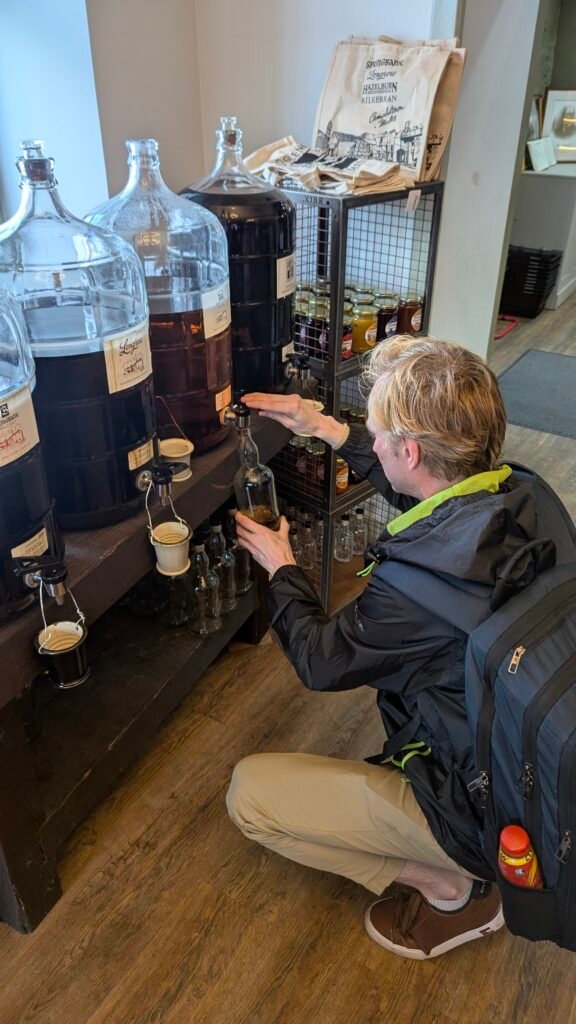
The cage bottles and core range had been pretty much wiped out by this point, but I had one more thing I wanted to try: the fill-your-own bottles from the demijohns just inside the shop entrance.
The demijohns contain constantly changing blends of single malt from Springbank, Longrow, Hazelburn and Kilkerran. New cask samples and spirit are continually added, meaning the flavour profile is always changing.
Unlike the core range, these bottles are always available, making them a great way to take home something unique from the distillery without having to win the Springbank lottery.
On my previous visit, I’d bought a bottle of the Springbank that had recently been topped up with some 30-year-old. It remains one of my favourite bottles in my collection, so I was looking forward to trying the different blends again.
The staff allow you to sample each one before filling a bottle, and this time the biggest surprise was that my favourite wasn’t the Springbank. It was the Hazelburn.
On the nose, it had fresh pineapple, while the palate was spicy with oak, vanilla and, despite being unpeated, a hint of peat. I suspect that may have come from a re-charred barrel finish that had been added to the blend. I filled my own bottle and made sure it was pretty full, and at £67, I thought it was pretty good value too.
The Long Journey Home
The bus was on time, but roadworks added around 50 minutes to the journey back to Glasgow. Fortunately, I’d booked a later connection to Edinburgh, so I only had about five minutes to spare before catching my bus home.
I eventually arrived back in Edinburgh at around 11:30 pm. It had been a long day of nearly 20 hours from leaving home to getting back, but it was absolutely worth it.
There is something special about Campbeltown. Despite its relatively small size and remote location, there is a real buzz around the distilleries. You can feel that people have made the journey specifically for the whisky, and there is something quite enjoyable about being surrounded by so many fellow whisky enthusiasts who have made the same pilgrimage.
And, of course, the whisky itself is excellent.
I’m going to try to make my bottle of Springbank 15 last as long as possible and only drink it on special ocassions (or only on days ending in Y).
Like Campbeltown itself, it’s something special.

You May Also Like

Whisky Distilleries Within 90 Minutes of Inverness by Public Transport
Day 1- Whisky Trip to Harris and Skye